
GLM 5.1 is a paid, coding focused model that, in my hands, runs neck to neck with Claude Opus 4.6 on complex engineering and code analysis. It is only available through Zhipu’s coding plan with quarterly billing, and the current hosted endpoint is the only way to use it. If you care about long context coding work, deep log analysis, and agentic workflows, I would pay for it right now, but skip it for general purpose chat.
Integration is straightforward in Open Claw: install or upgrade to the latest release, add your Zhipu API key, set the provider to their hosted endpoint, and set the model name to GLM 5.1. If you see a “model not found” popup, define a model entry in the config with an id for the GLM model, name set to 5.1, provider set to Zhipu, and the correct base URL from their docs, then restart the gateway. In fresh tests, GLM 5.1 built a nontrivial HTML simulation and delivered a senior DBA level fix for a legacy SQL query on the first pass.
For a comparison point on a different family, see our look at Ernie 5.1 performance.
Setup on Ubuntu
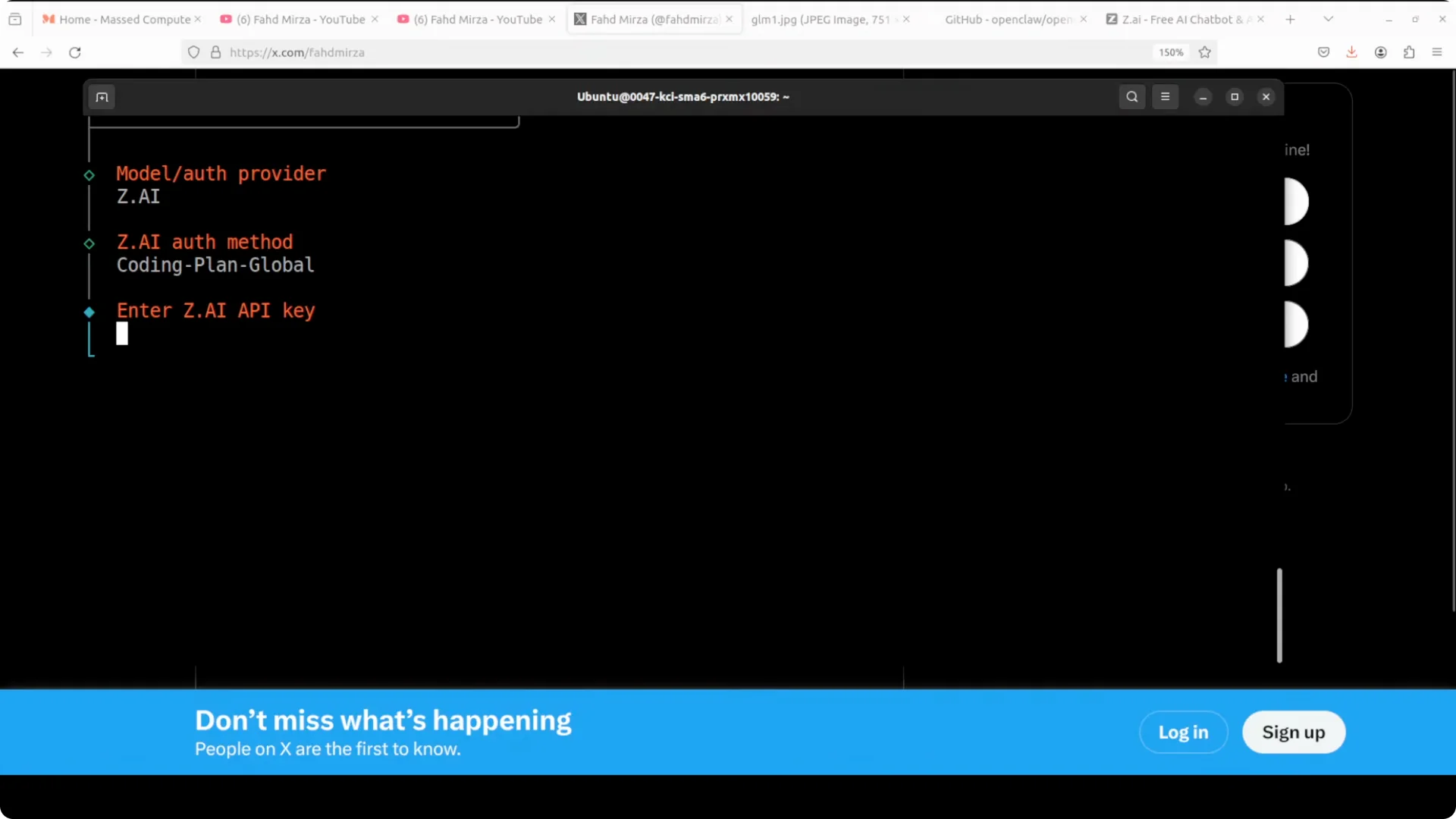
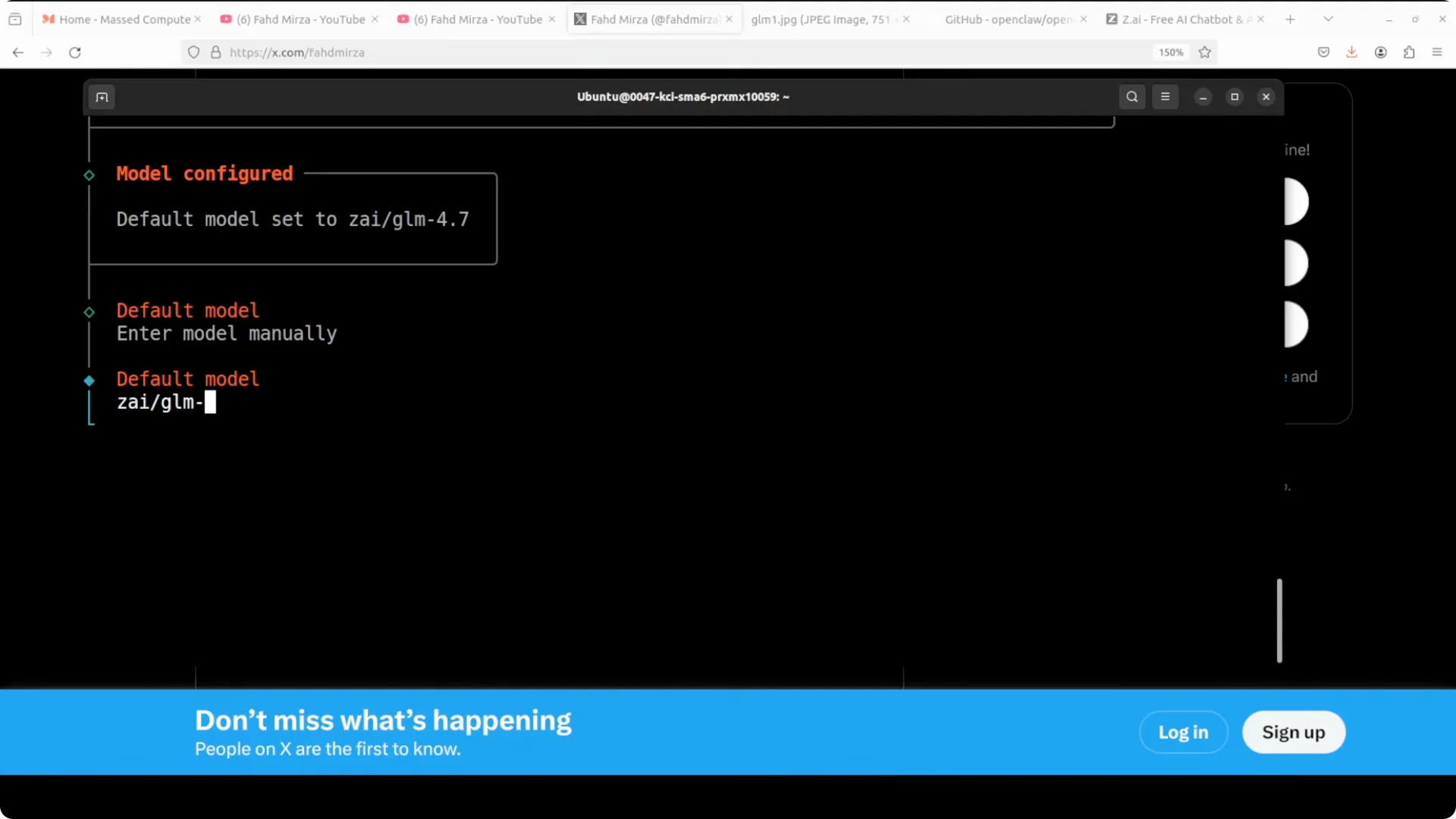
I installed the latest Open Claw on Ubuntu and recommend upgrading if you already have it. Launch the quick start, then choose the Zhipu provider and the coding plan tier. Paste your API key when prompted.
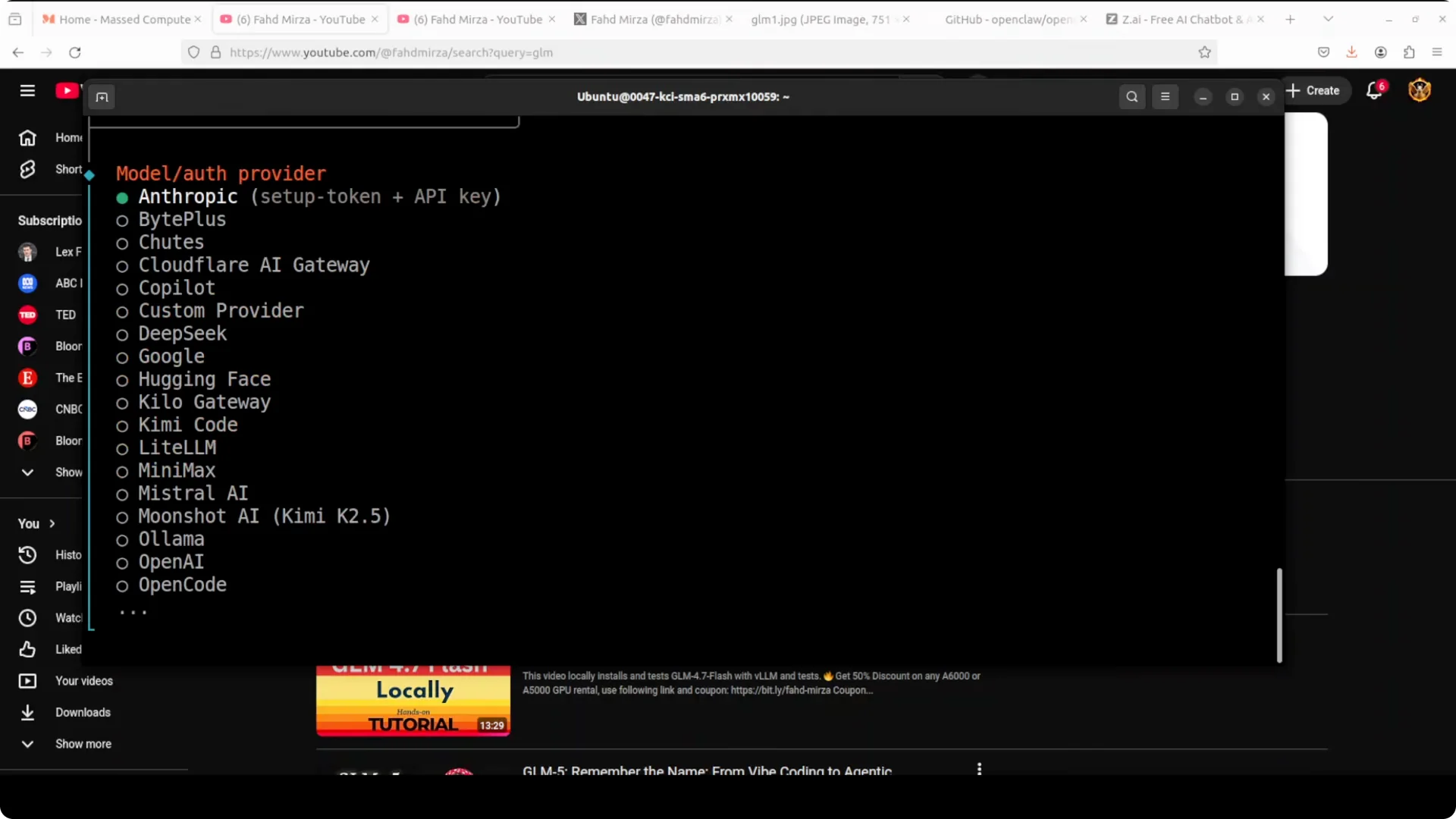
From there, enter the model manually as GLM 5.1. If a “model not found” prompt appears, add the model in your config. Restart the gateway so the changes take effect, then launch the TUI to confirm the model is active.
If you often switch provider variants, some clients stumble when swapping back and forth. If you run into that kind of quirk, this guide on fixing model switching issues can help you reason about similar cache and selector problems.
Minimal config you need
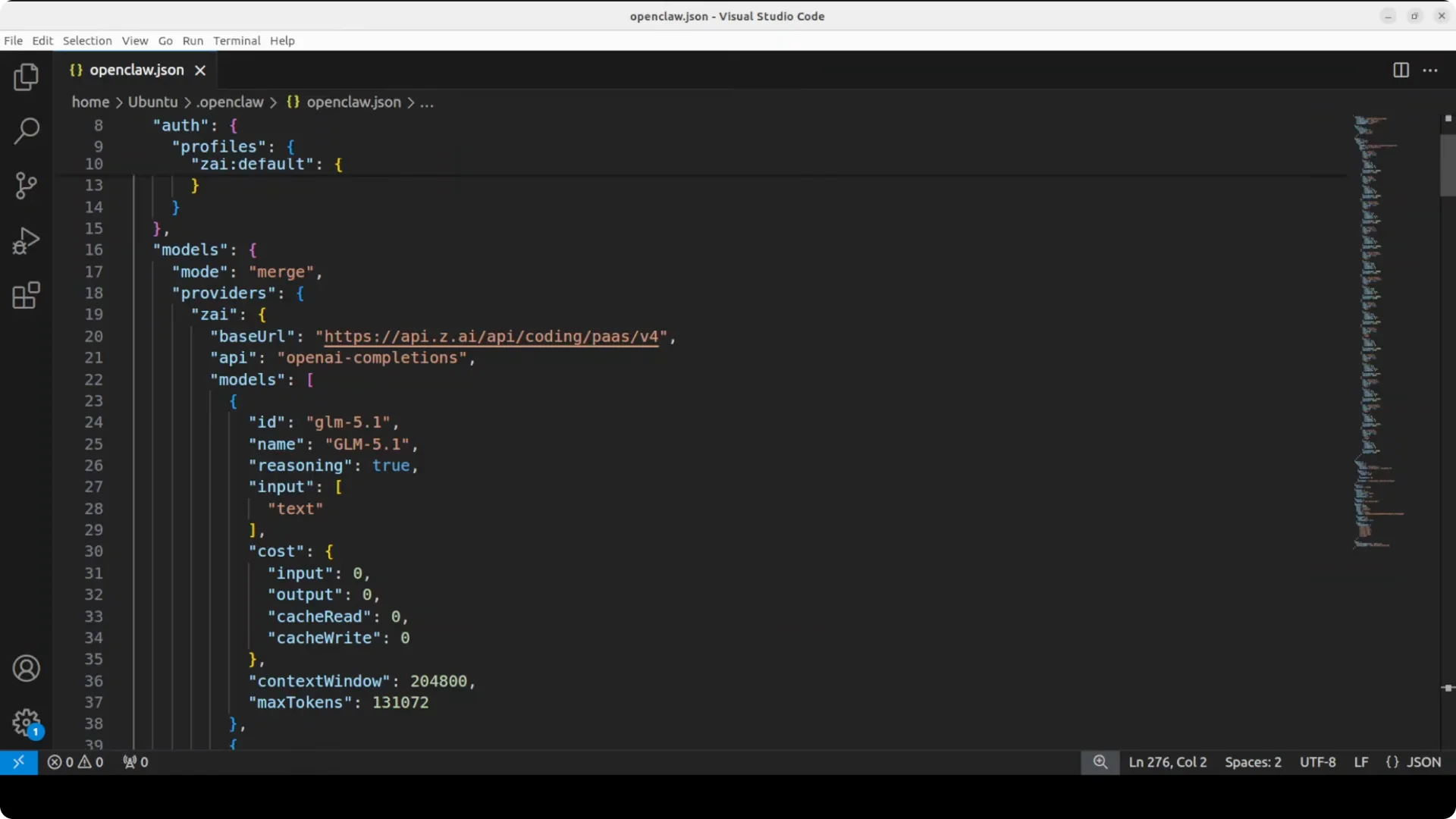
Make sure the config has a GLM model entry with id for the GLM family and name set to 5.1. The provider should be Zhipu with the correct base URL and your secret key set. Save the file, restart the gateway, and verify the TUI shows GLM 5.1 connected.
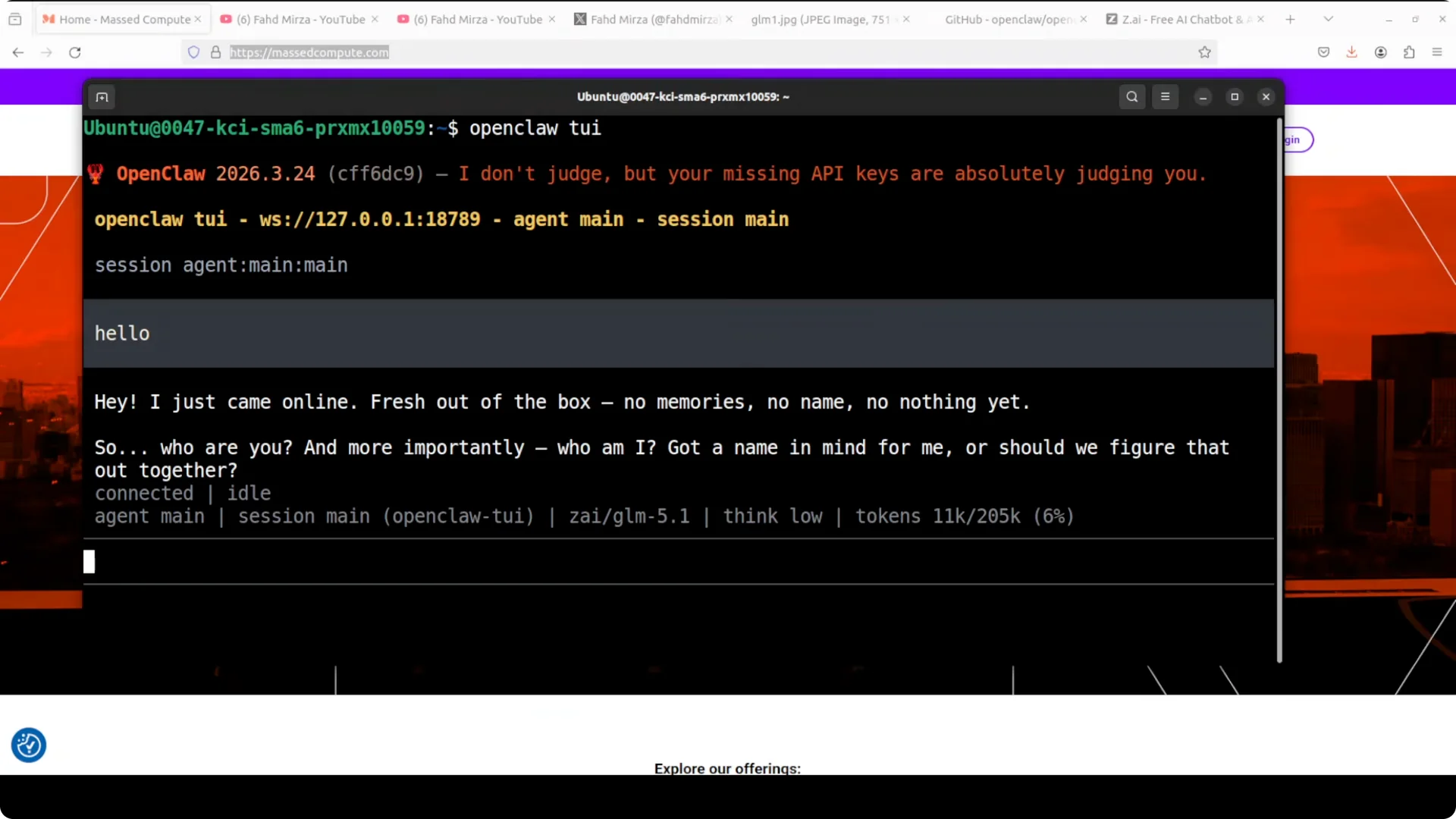
Skip optional channels if you only want to test the model. I left Telegram and other connectors disabled to keep the path clean. This reduces surface area while you validate inference.
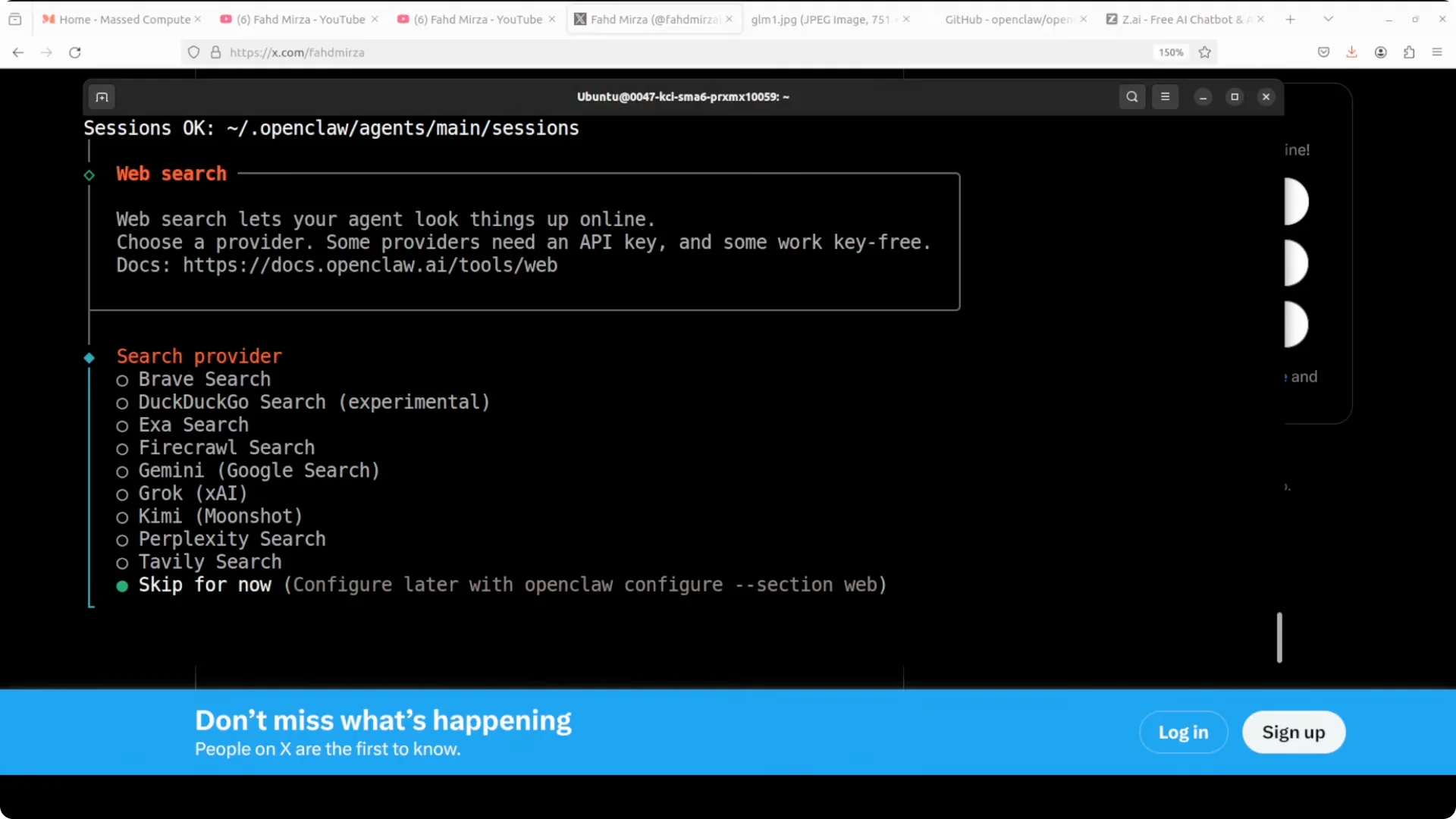
If a client keeps pointing to the wrong runtime after edits, a reset process like the one in this model switching fix can be a useful pattern.
What I know about GLM 5.1
The model sits around 754 billion parameters, same family architecture as GLM 5 with post training focused on coding. Context is roughly 200 thousand tokens with about 130 thousand max output tokens from what is publicly shared. It is text only at the moment.
It shines on long horizon engineering work, self correction, log analysis, and agentic coding workflows. It is not great for general purpose chat and creative tasks. If you miss GLM 4.5 Air for broad use, GLM 5.1 will not scratch that itch.
Zhipu has hinted at open weights later, possibly in April, but that is not confirmed. Until then, the hosted coding plan is the only route. If open weights land with a permissive license, this will be a strong local option in Ollama or LM Studio.
If you ever need to juggle model slots across clients, the patterns in this related troubleshooting note are worth a skim.
Coding test one
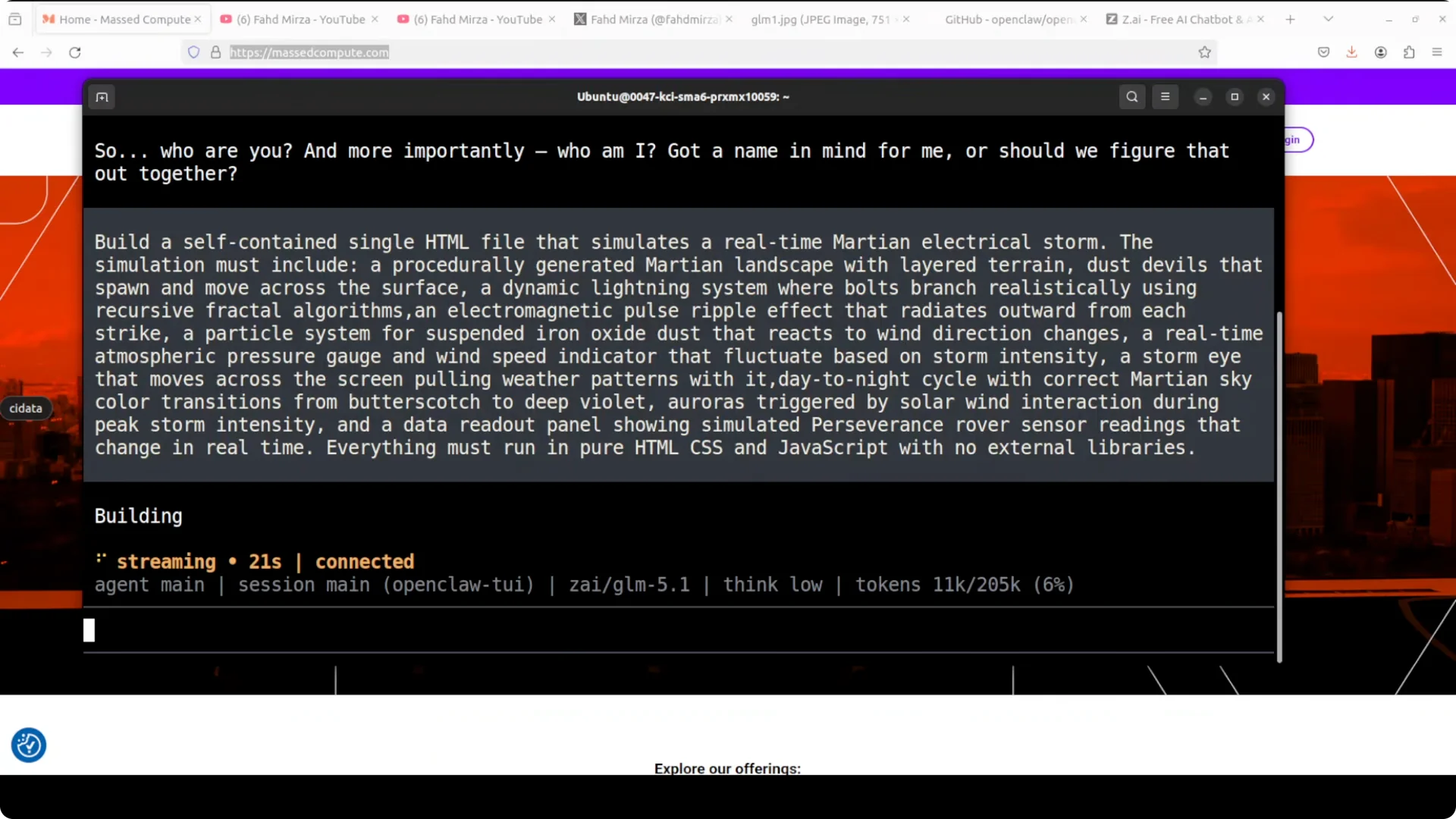
I asked for a self contained HTML file that simulates a real time Martian electrical storm with lightning, iron oxide dust, storm density fluctuation, an atmospheric gauge, and rover telemetry. The result was visually competent with layered terrain, a butterscotch sky gradient, dynamic gauges, and coherent telemetry that updates correctly. The day night cycle ran deterministically and the status system ticked as requested.

Lightning needs work. Bolts spawn from the top and often fade midair instead of striking ground, which breaks the visual promise of an electrical storm. Dust particles and iron oxide effects are solid, and the aurora trigger is a nice touch, but the storm eye is a plain gradient blob that lacks drama.

I would still call this an impressive first shot for a single pass code generation. A second prompt could likely fix the strike behavior and the storm eye. For interactive visual simulations, GLM 5.1 is already usable with small nudge prompts.
If your environment keeps clinging to an older backend after swapping models, a cache and selector reset like in this related fix can point you in the right direction.
Coding test two
I fed a monthly trust accrual report query from a banking system that calculates interest per account, then rolls up by branch and product type with year over year comparison. A subtle bug caused certain accounts to appear twice in aggregation, inflating totals for specific product types. It is the kind of issue that often passes code review.
GLM 5.1 found the exact bug, explained precisely how an OR produced fan out duplication, identified affected accounts, and traced the inflation through every downstream CTE. It then wrote a corrected file and kept a .bak of the original. This was a senior DBA level analysis on a deliberately tricky fifteen year old query, done in one pass.
On the strength of that, I would trust it with legacy SQL modernization, migration validation, and static reviews. I would still run it behind tests and sample data audits. The model is rigorous in reasoning through joins, filters, and rollups.
Specs, availability, and pricing
The coding plan is quarterly and not cheap. If your workflow makes heavy use of long context code understanding and deep debugging, the price is justified by saved engineering time. If you just need a general model for everyday tasks, this is the wrong tool.
Weights might arrive later for local inference. If the release lands under a permissive license, running full precision locally on a large GPU would be attractive. Until then, the hosted route is the only option for GLM 5.1.
For another look at maintaining stability while switching model variants in a stack, this short troubleshooting explainer pairs well with the practices above.
Practical use cases
Long running coding sessions that require stepwise planning, execution, and self correction. Production log forensics and incident timelines with multi file context and tool call summaries. Legacy SQL audits, schema drift analysis, and rollup correctness checks across CTE chains.
Large codebase refactors where the model must remember architectural constraints for hundreds of thousands of tokens. Generating deterministic visual prototypes in a single HTML file, then iterating on precise defects. Pair programming for agentic coding flows where the tool calls and evaluations need careful narration.
If your day to day is deep engineering rather than general chat, GLM 5.1 delivers. For broad conversational tasks, pick a model built for that domain.
Final thoughts
Is it worth paying for GLM 5.1 today for coding work? Yes. The SQL analysis alone would have paid for a month given the time it saves, and the simulation output shows strong single pass skill. It is not a generalist, but it does its core job very well.
Open weights would make this even more compelling when they arrive. Until then, the hosted coding plan is the way in. I will keep testing it as more details and documentation surface.