
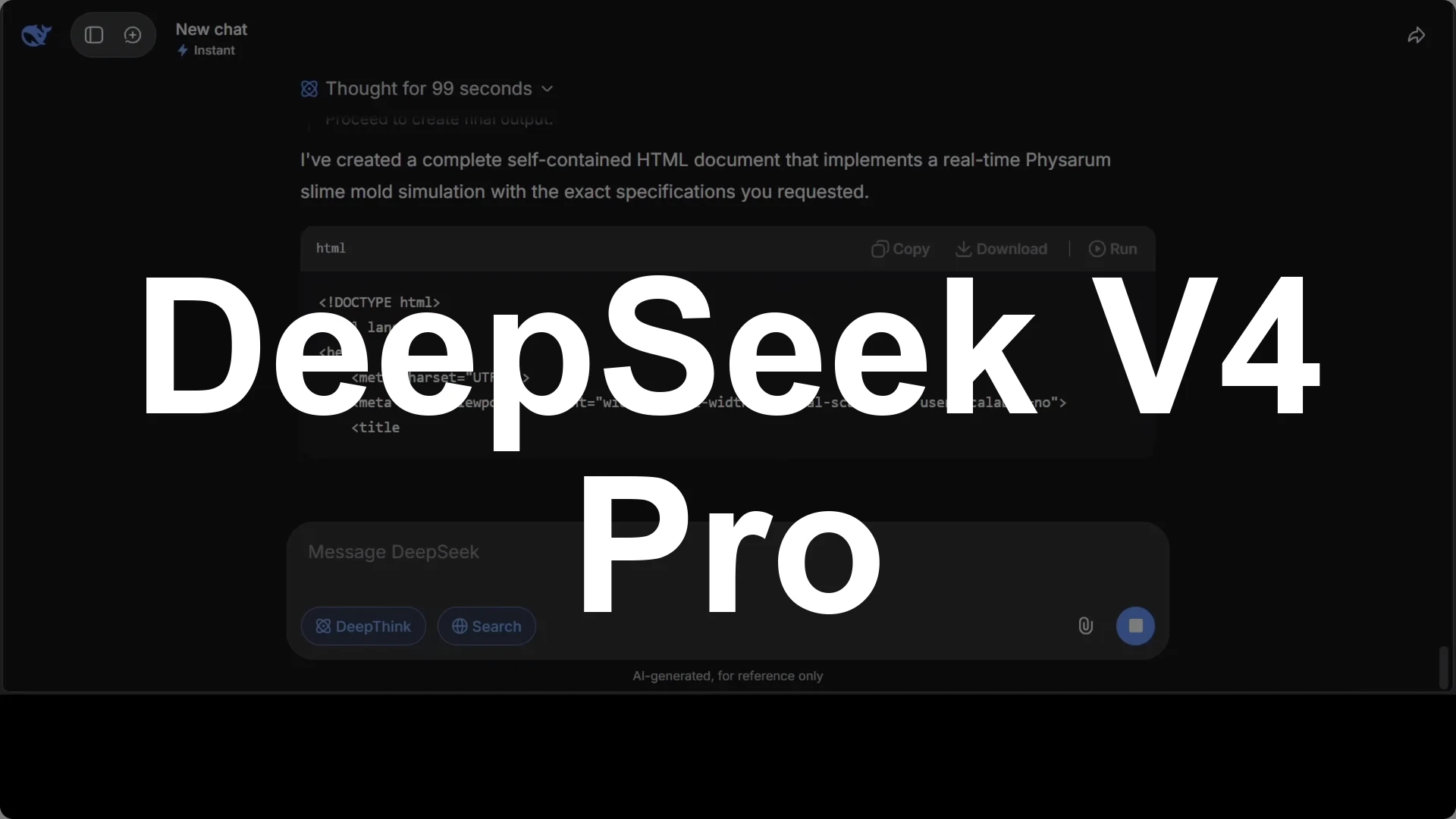
DeepSeek V4 is a new family of models built around compressed sparse attention and hierarchical compressed attention that deliver million token context at roughly 27 percent of the compute cost. In practice it holds huge code bases and very long conversations in active context while staying fast and memory efficient, and its pro variant at 1.6 trillion total parameters is currently the strongest open source model I have tested for reasoning and coding.
Across hard evaluations it produced a correct agent based slime mold simulation from a bare spec, resolved a constraint heavy scheduling puzzle, delivered accurate multilingual translations for a city announcement, and completed a two part physics problem that combined classical mechanics with general relativity. The flash variant at 284 billion parameters is a mixture of experts with about 13 billion active tokens per step that already beats DeepSeek 3.2 on most benchmarks while being dramatically cheaper to run.
What it is
DeepSeek V4 is not a single model. It is an architectural approach, a training pipeline, and multiple deployment profiles tuned for speed, cost, and reasoning.
The pro model pushes parameter count and expert routing. The flash model focuses on throughput and cost.
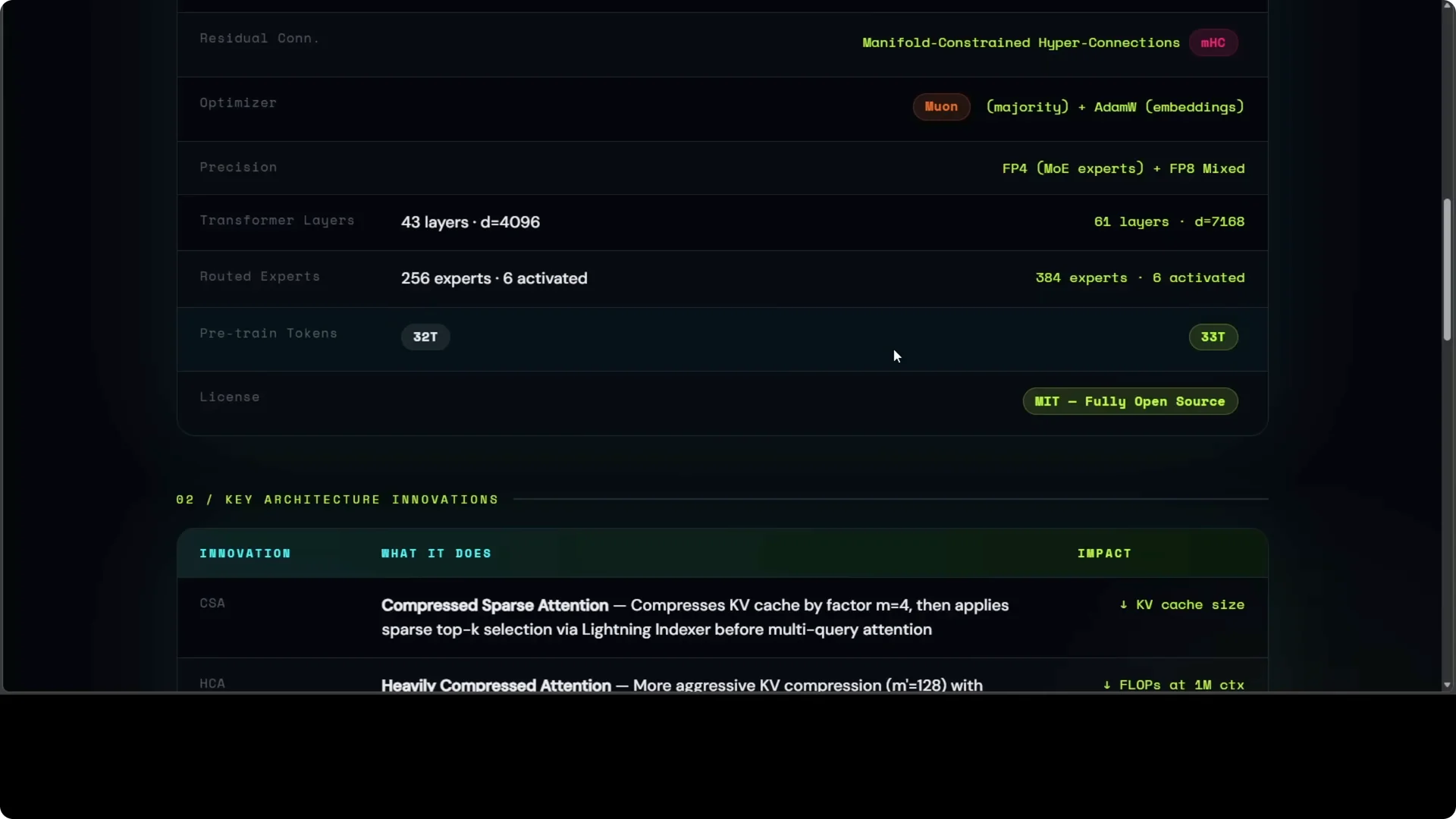
Architecture in plain words
Compressed sparse attention groups nearby tokens into compact chunks, then attends to only the most relevant compressed chunks over long ranges. This lets the model keep far more context hot without paying the full compute bill.
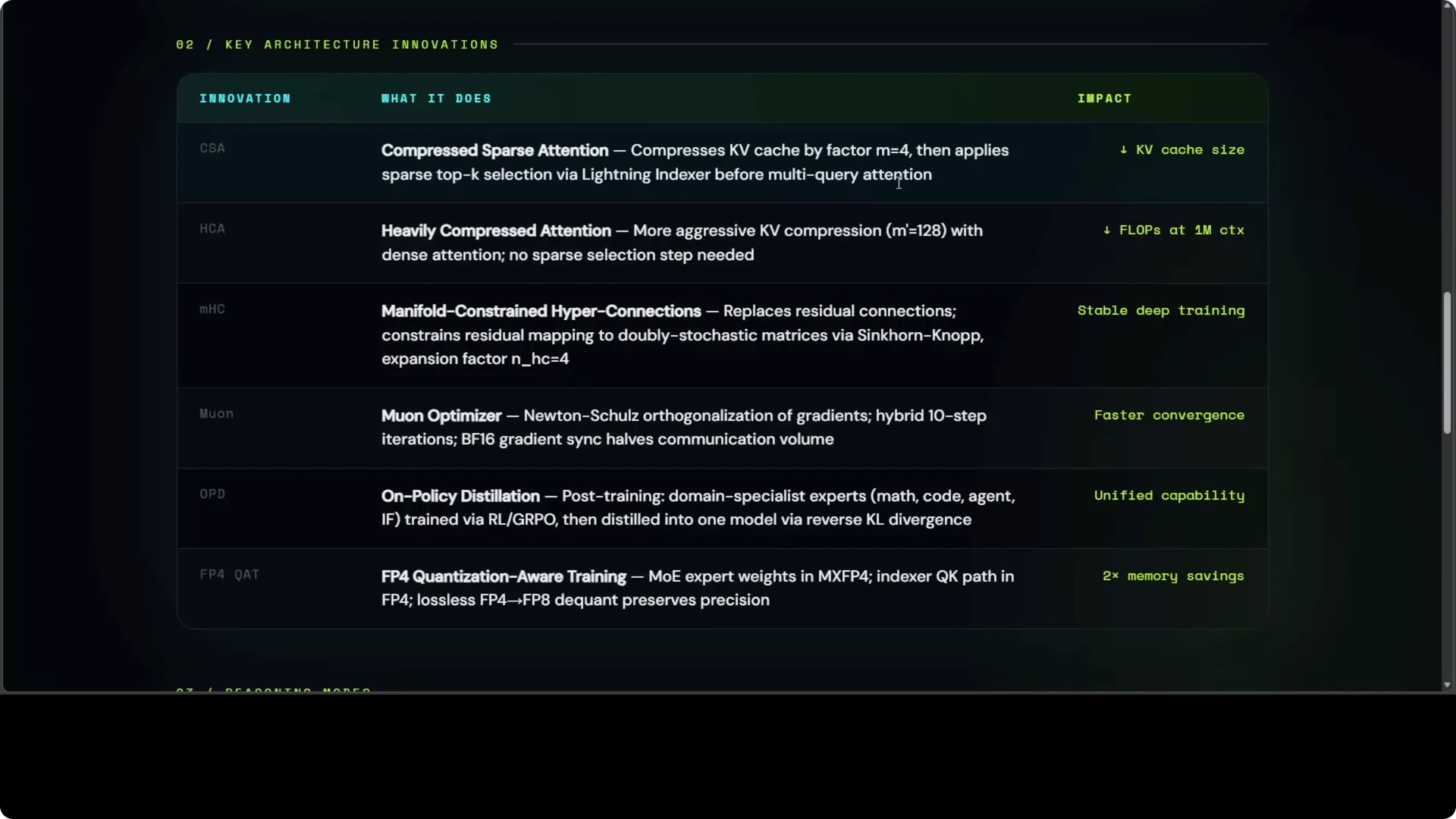
Hierarchical compressed attention goes further by summarizing larger spans into higher level chunks for long distance recall. The result is stable long range reasoning that still reacts to local details.
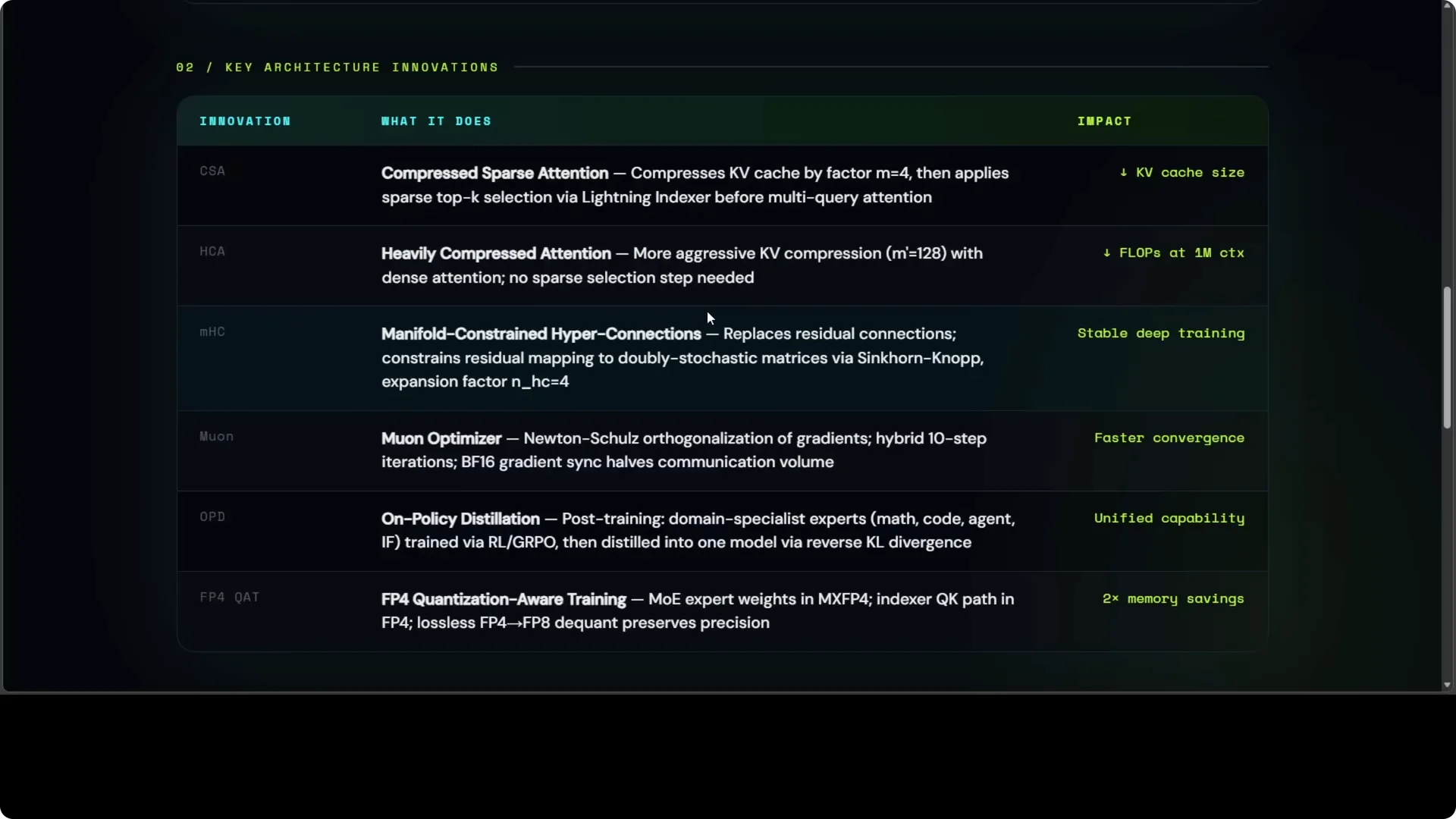
The residual path is mixed through what the team calls MHC, which blends layer outputs with a mathematically controlled mixer rather than simple addition. Training uses a new Muon optimizer and a post training distillation step that raises specialist experts, then fuses them into a single brain.
Memory and quantization
Weights can be stored in FP4 Q80 style formats that crush memory footprint to near 4 bit density while preserving accuracy under routed experts. For long context work this matters because the attention cache also shrinks under compression.
On real tasks this translates into lower GPU memory and faster iteration while keeping quality high.
Thinking modes
There are three modes exposed for reasoning depth. Non Think is instant responses, Think High adds structured intermediate steps, and Think Max pushes full chain of thought and tool use.
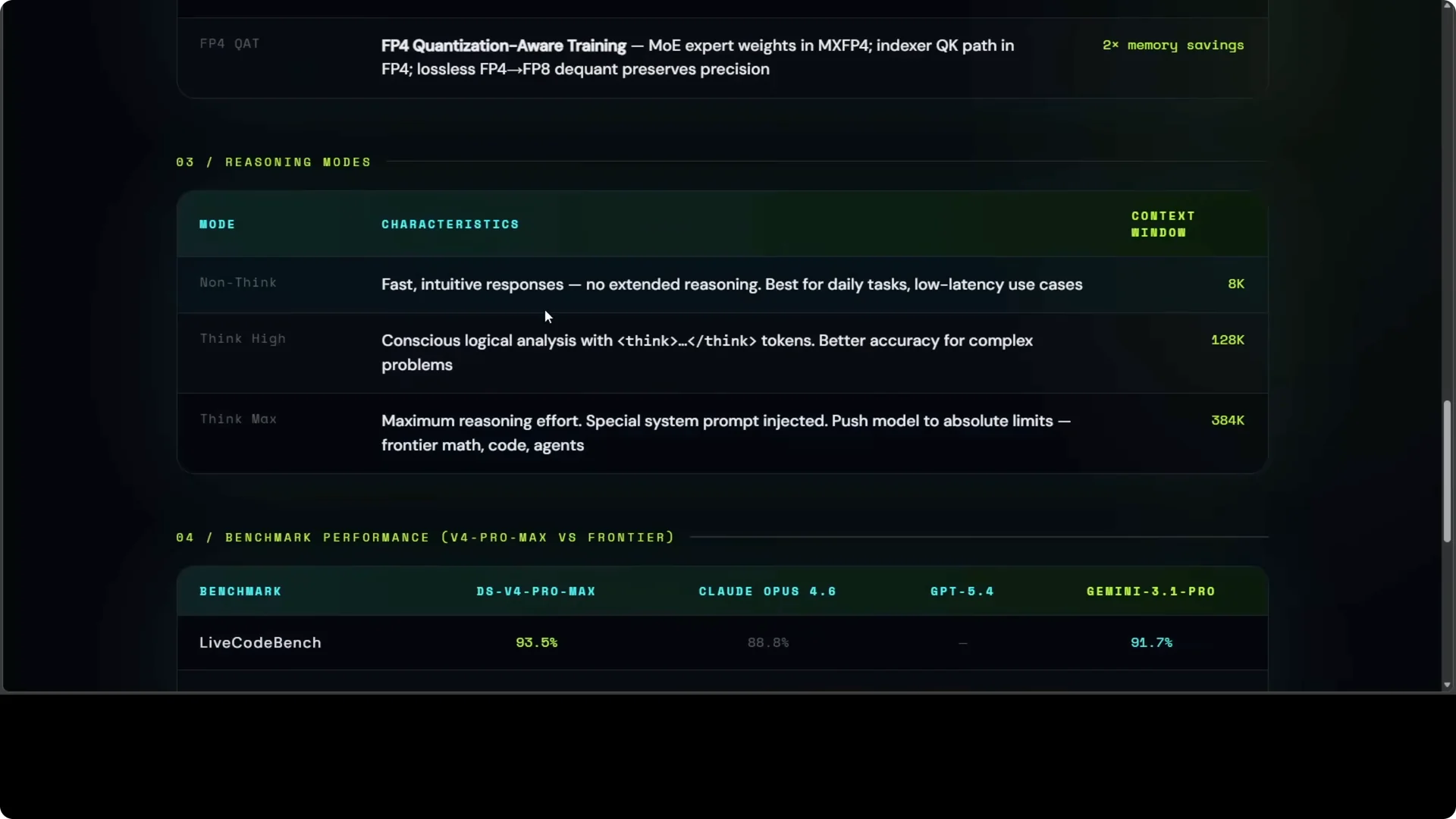
Use Non Think for translation, quick summaries, and chat. Use Think High for code generation and planning. Use Think Max for proofs, multi hop reasoning, and schedule synthesis.
Long context in practice
With compressed attention the model comfortably keeps long documents, multi file projects, and session histories active. It stops repeating itself under million token loads and can jump to the right section when queried.
This is the first time I can hold large planning artifacts, specs, and code in a single prompt and still get targeted edits.
Reasoning tests
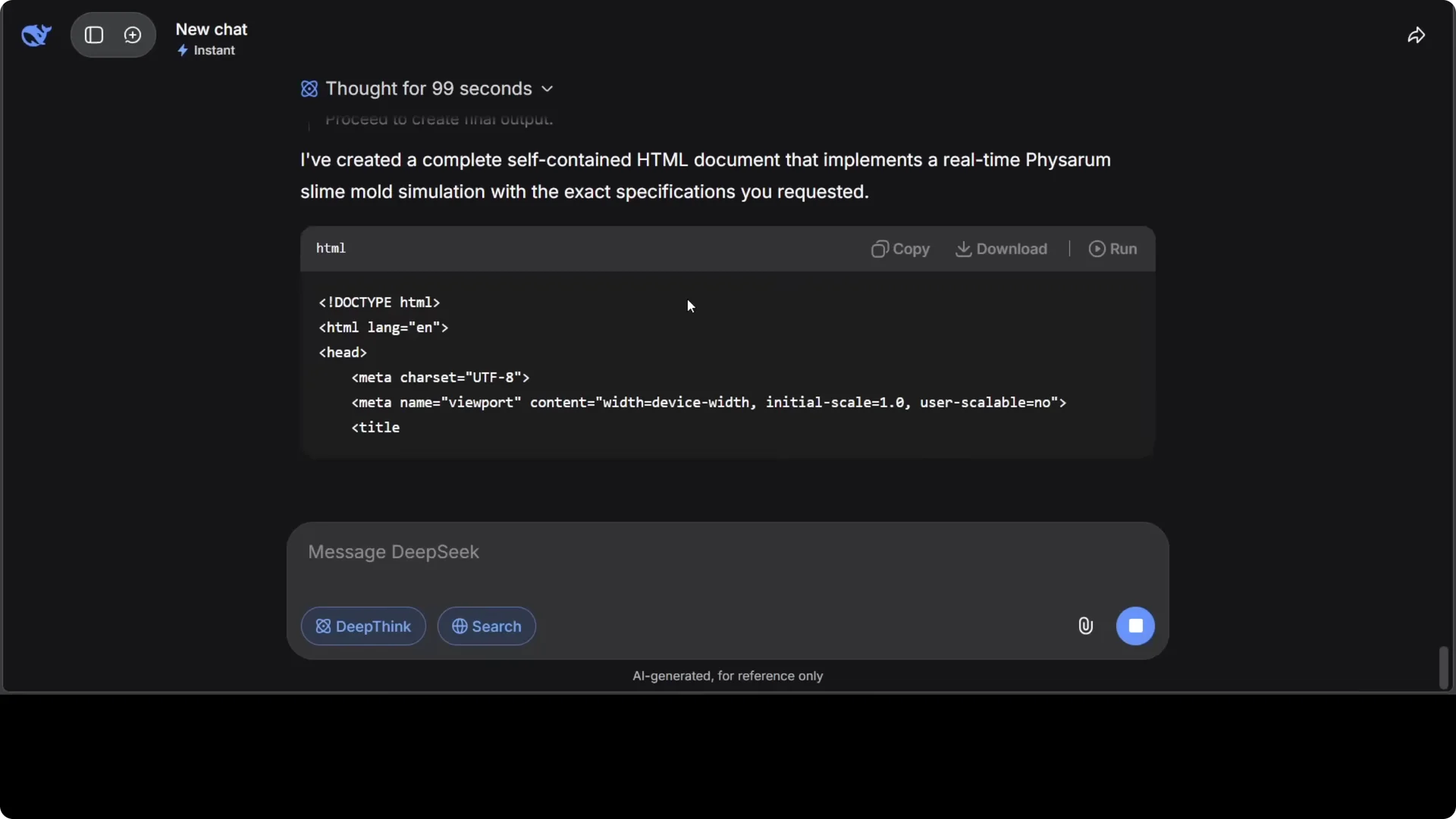
I asked for a single self contained HTML simulation that models Physarum polycephalum as thousands of agents that sense trails, leave chemicals, and self organize into a network. The model produced a working simulation that looks and behaves like a living network from only a written spec.
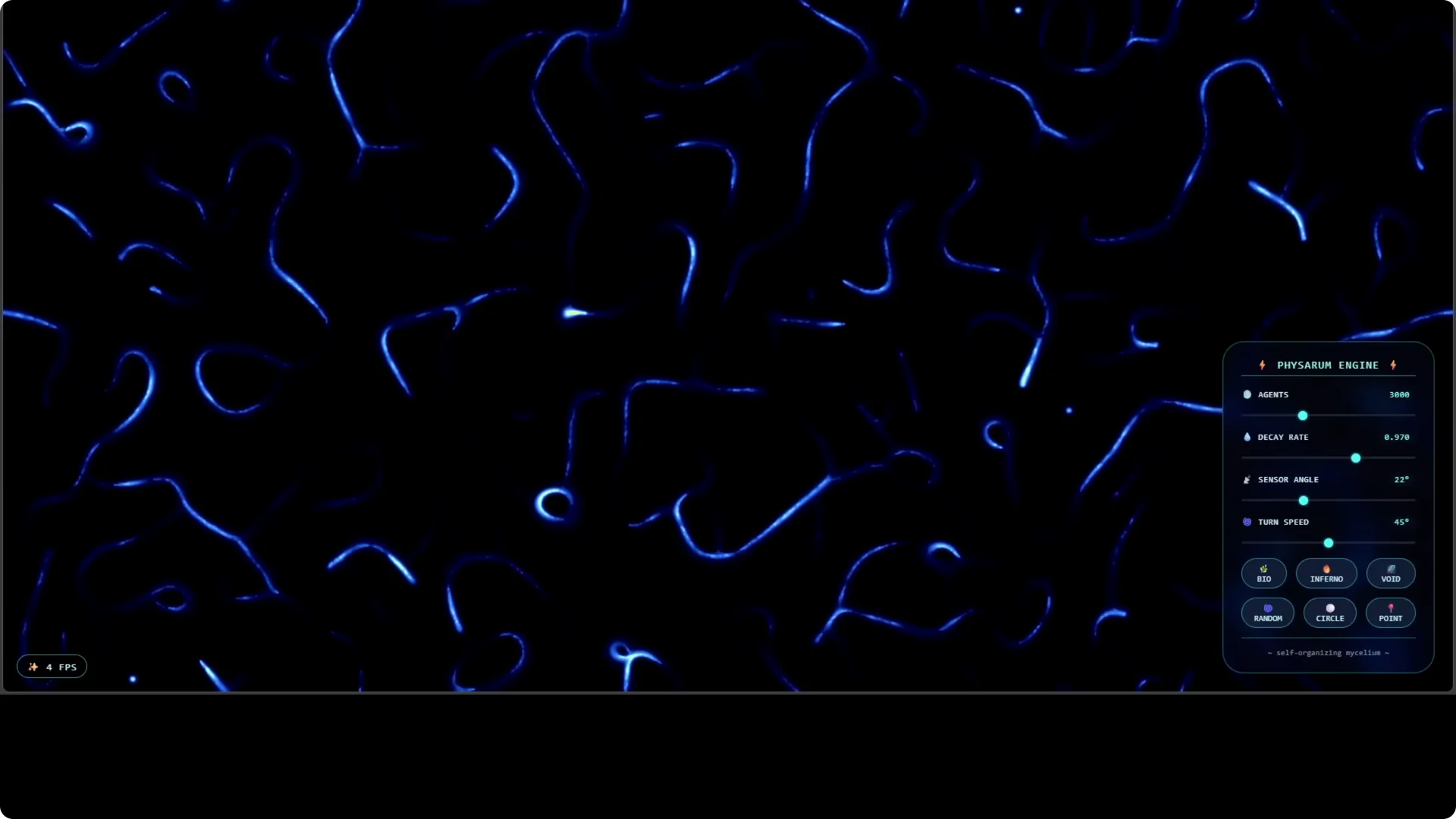
No hints were given on algorithm choice beyond the spec. The output matched expectation and the parameters behaved as intended.
Constraint scheduling
I prompted a staffing roster with tight rules across availability, language requirements, incompatibility pairs, consecutive shift limits, and conditional dependencies. The model reasoned step by step, flagged that Saturday the twenty second was impossible, and produced valid rosters for all solvable days.
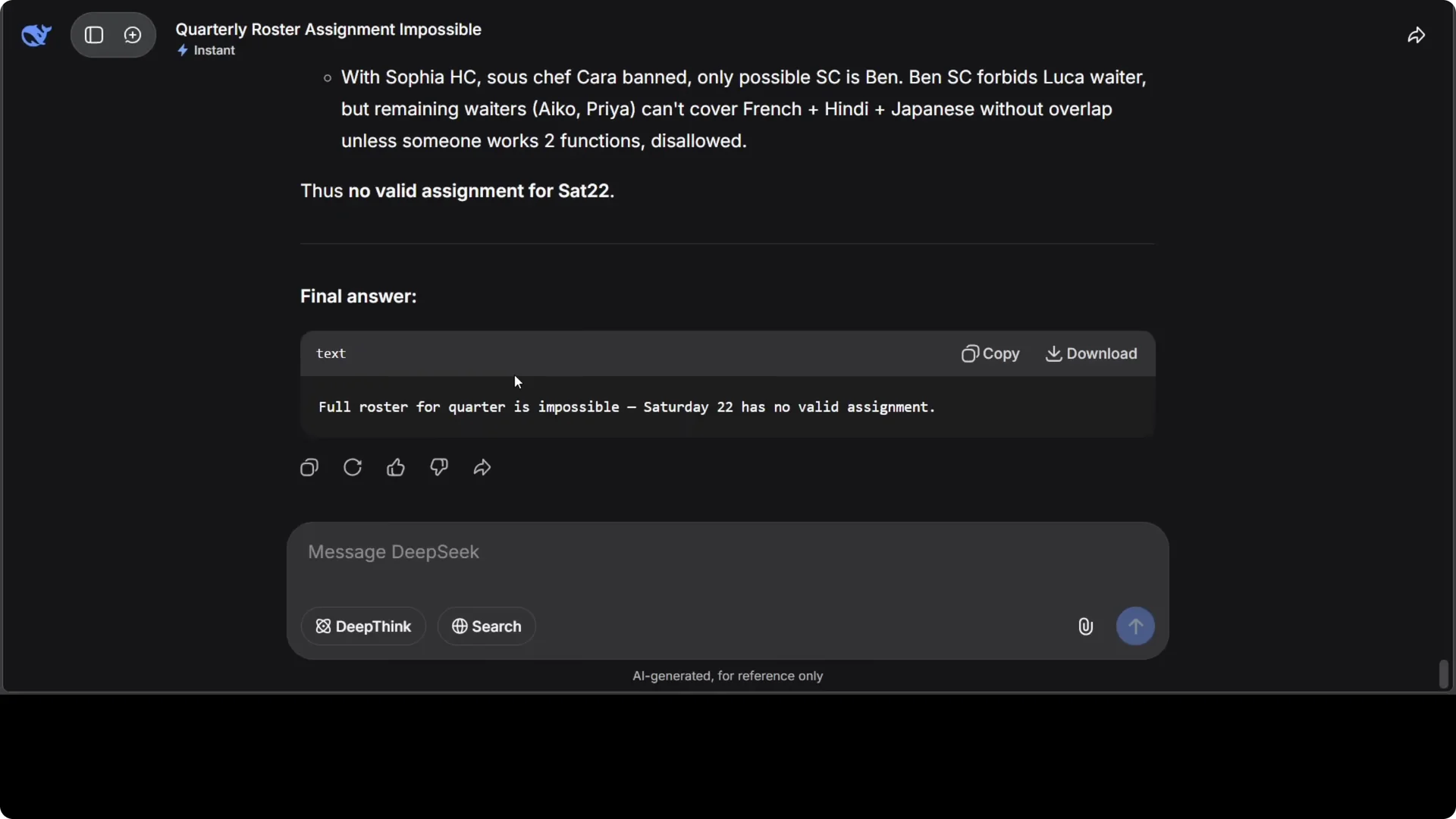
The constraints were intentionally ambiguous in spots like the exact number of waiters per function. It interpreted the ambiguities up front, stated assumptions, and delivered a clean final schedule.
For structured coding and planning workflows that pair well with this style of prompting, see this GSD approach to Claude Code.
Multilingual check
I used an official style announcement from Prague City Council that welcomes visitors to Old Town Square for the ceremonial opening of the Saint Wenceslas festival. The model translated it into a wide set of languages across regions with strong accuracy in the ones I could verify.
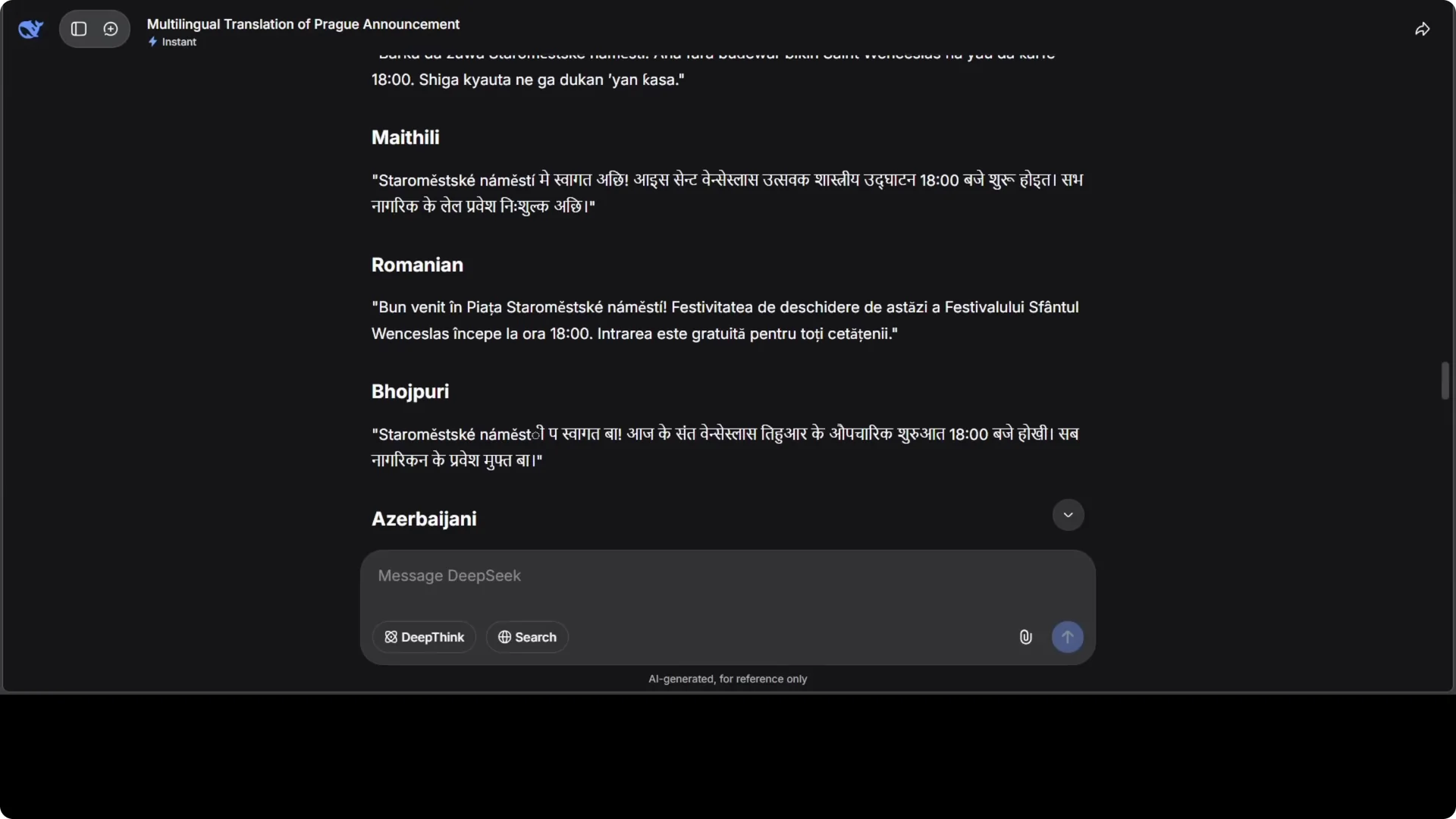
The tone stayed formal and civic across scripts. For rapid localization and batch announcements this is production ready.
If you prefer to drive assistants from a terminal centric setup while testing prompts like these in your dev flow, explore the Claude Code terminal workflow.
Math and physics
I set a two part prompt that required classical mechanics derivations and general relativity corrections with clear equations and physical interpretation. The derivations were correct, the gravitational terms were introduced at the right order, and the final expressions and pulsar related discussion lined up with expected values.
The work was neat, readable, and accurate with consistent variable use. It earns full marks on both method and result.
To scale this kind of expert prompting into a repeatable coding practice, check out techniques from our Superclaude method guide.
Benchmarks and perspective
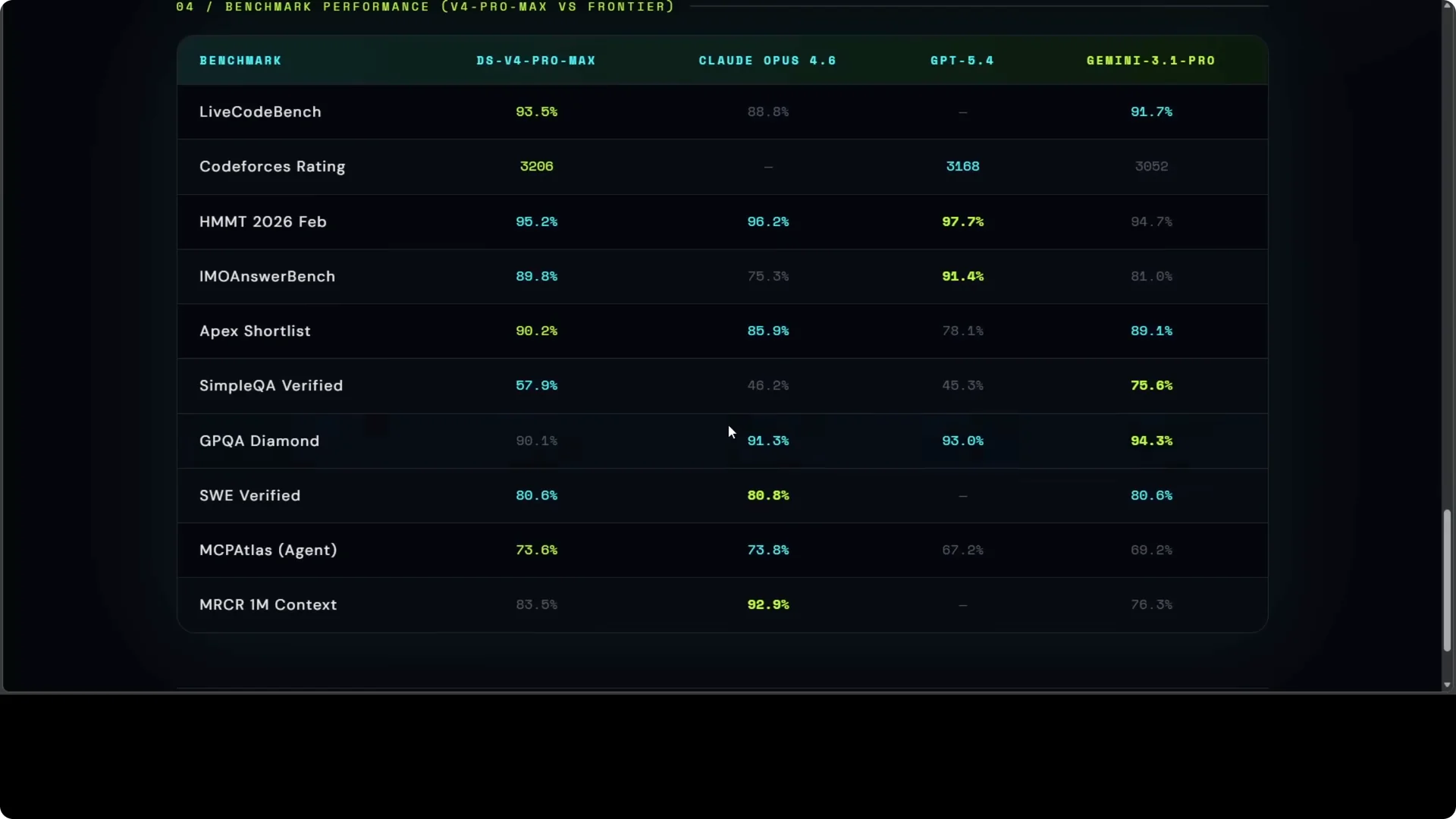
Benchmarks show strong results across the board with some tests where GPT still leads. Coding and structured reasoning are the standout strengths in my runs.
This is a real leap in how long context and expert routing show up in applied work, not just charts.
For teams coordinating iterative code work with model assistance, kanban driven flows can help. See an automation pattern with Claude based kanban boards.
Practical use cases
Keep entire code bases in context and ask for scoped edits to a file plus ripple effects across callers and tests. Store multi week research notes, decisions, and plans and query them with precise prompts.
Run multilingual public notices and customer updates in one pass with consistent tone. Tackle combinatorial planning like rosters, conference agendas, or logistics with explicit constraints and transparent reasoning.
If you want a compact set of skills that pair well with this model’s strengths, see these tips to boost your coding workflow with Claude.
How to work with the modes
Step 1: Pick the depth
Start with Non Think for speed on translation and straightforward edits. Move to Think High when the task needs decomposition such as multi file code generation or data cleaning.
Reserve Think Max for proofs, schedules with cross constraints, and multi hop analysis.
Step 2: Set the spec
Write the objective, inputs, constraints, and success checks in short sections. Ask the model to restate assumptions before solving to lock the interpretation.
For long prompts keep entities and symbols consistent across sections.
Step 3: Inspect and iterate
Request the final answer first, then ask for the working if you need to audit. If a constraint is violated, tighten the rule and rerun with Think High or Think Max.
Stop when the model converges and pin the assumptions in the final output.
Notes on the training pipeline
Specialist experts are trained for math, coding, and language, then distilled into a unified model. This gives focused skill without losing generality.
The optimizer and residual mixer stabilize very deep networks under routed experts. That is why the model stays coherent at long context and under heavy reasoning load.
Final thoughts
DeepSeek V4 brings long context, routed experts, and robust reasoning into a single package that is fast and affordable to run. It holds entire projects in memory, writes working simulations from specs, solves thorny schedules, translates cleanly, and handles graduate level physics with correct math.
The flash model already outperforms earlier releases at a fraction of the cost, and the pro model sets a new bar for open source capability.